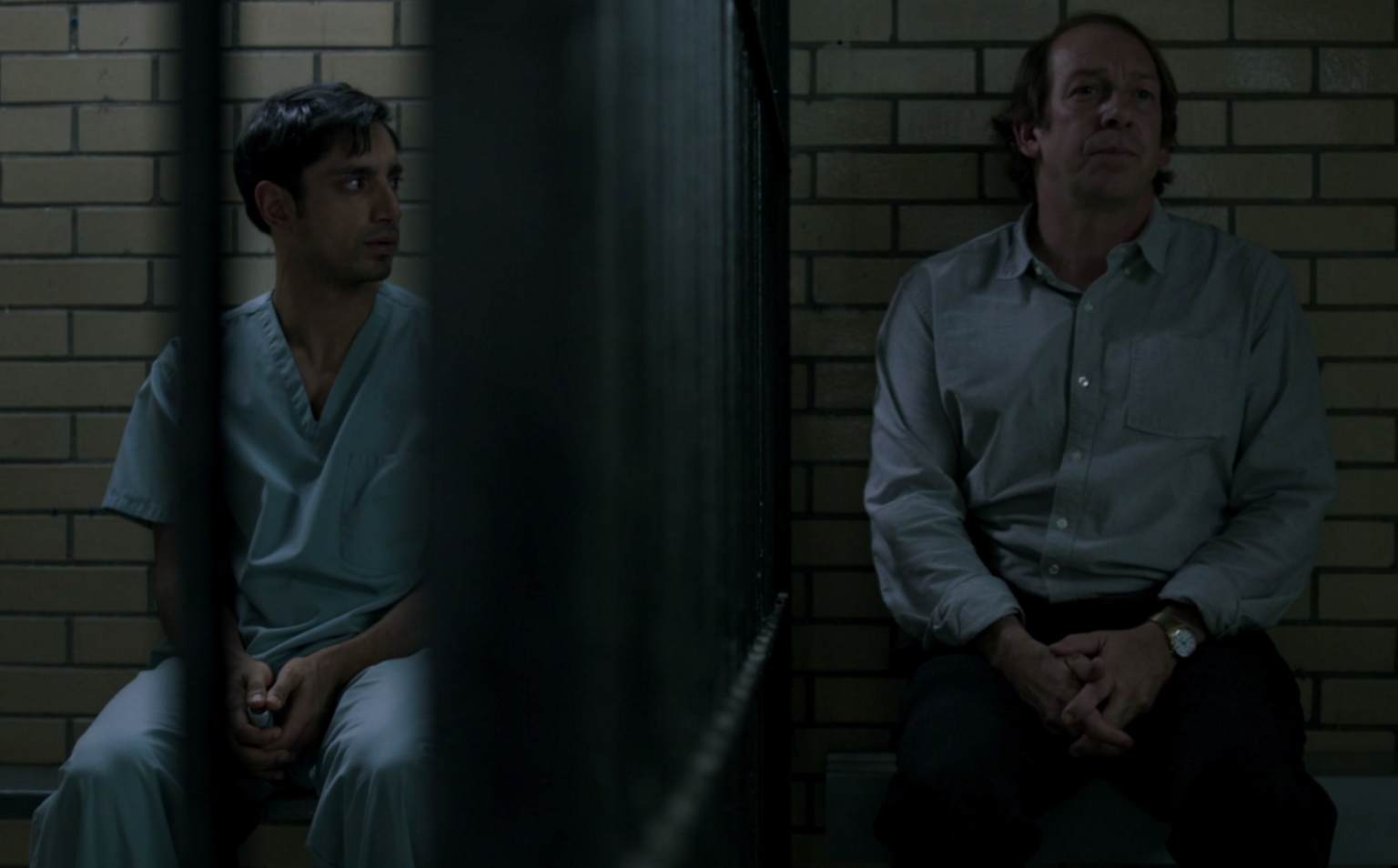
It took only three episodes for The Night Of to move on from the grisly murder of the premier and focus on the repercussions of the homicide. In an earlier draft, I wanted to write that night set forth “a wild sequence of events.” Then I deleted it immediately. Because they’re not wild, or unique. The Night Of revels in the understated, both in its story and the color of its cinematic palette.
Pop Culture
The Two Sides of “The Night Of”
The Night Of is a story of binaries. It’s the tale of a naïve boy’s first encounter with the legal system and characters that are jaded after years under the crushing weight of the oppressive structure. It’s a story told in the subtly of Jack Stone’s smirk as he begins the biggest case of his career and the blunt reality that comes from the fist of a prison inmate. It’s both the story of the truth and tales lawyers will concoct before a jury of Naz’s peers.
This last binary is what begins the second episode. As Naz tries to explain the circumstances that led him to his prison sell, Stone interrupts him by saying, “I don’t want to be stuck with the truth.” The truth isn’t important, not for the court and not for the viewer. We already know the truth. Well, most of it. The first episode gave the audience an objective telling of the night in question. We saw Naz travel the streets of New York in his father’s cab. We saw him pick up the girl, swallow the pill, have sex. The only part we didn’t see was the graphic homicide. That’s the only truth we are interested in. But as Stone said, that truth does not matter.
How Comfortable Do You Feel in Your Mask?

What is Mr. Robot about? Is it simply about a group of hackers cosplaying Fight Club attempting to overthrow the world economic order? That description would be a clean and timely elevator pitch, but the hacking is only a jumping-off point. Sam Esmail, Mr. Robot’s creator and show runner, has asserted that the show was inspired by the Arab Spring[1]. It’s possible that Esmail is trying to use Mr. Robot to make a statement about revolutions in general.
Yet, the show is set within the United States, and the action primarily takes place within New York City. Despite a recent streak of loud and angry political movements, there is no revolution in America, yet; just plenty of discontent about technological dependence, income inequality and a widening generation gap. Mr. Robot undeniably taps into all of the above.
Orange is the New Black Season 4: The Best Thing Since The Wire

“Hey, have you seen The Wire? No? It’s the best show ever.”
If you’ve ever debated the best shows on television, you’ve probably had some iteration of this conversation. And you know what, that person was right: The Wire was the best show on television. While titles like Breaking Bad and The Sopranos may be popping into your head, the fervent devotees are quick to note the series that depicts an unflinching portrait of Baltimore is undeniably the best. I’d argue its construction is the closest anyone has come to putting a novel on television.
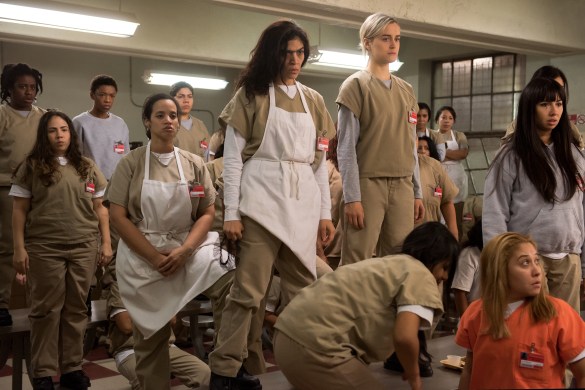
Now, unpopular opinion alert: Orange is the New Black just stood atop a cafeteria table and silently declared itself the best show currently on “television.” It did so by following the blueprint laid out by The Wire.
“The Night Of” is Dark and Full of Terrors

HBO
“The night is dark and full of terrors.”
That is a refrain from HBO’s hit fantasy series Game of Thrones, but it applies just as well, literally and figuratively, to the premiere episode of the network’s latest eight-part miniseries The Night Of.
The episode takes place over a single night in New York City, following Naz (Riz Ahmed), the soft-spoken son of a Pakistani cab driver. Naz’s night begins like so many stories about millennials coming-of-age over the course of an evening out in the Big Apple. He breaks the rules, taking his father’s taxi without permission, meets a mysterious seductress (Sofia Black D’Elia) and even swallows some pills (probably Molly). The night culminates with Naz having sex with the hot girl.
But the night is never “fun.” There is no soundtrack of plucky indie music that swells at just the right moment. Instead, Naz awakes to find the girl dead, stabbed to death in a grizzly scene out of a Saw movie.
Coney Island Rotary Club

Eric Taylor/Reuters
On Monday, the United States of America turns 240 years old. In celebration of the freedoms and rights we assured ourselves by Brexiting before it was fashionable, many people across this nation will take advantage of their day off by, presumably and in no particular order, consuming equally astronomical amounts of beer and processed meat, wearing comically large, themed sunglasses indoors, firing off possibly illicit explosives, sporting the stars and stripes as poolside attire, getting into arguments over Wiffle ball and not once, not ever mentioning professional football’s relationship with CTE, all while blaring Rick Derringer’s “Real American”.
Among these and the many other truths the writers and signers of the Declaration of Independence held to be self-evident in July 1776 lies the freedom to watch a cherished pastime in a live, nationally-televised broadcast. Though its life as a television spectacle started as a midsummer novelty, meant to alleviate the tedium of baseball highlight after ever-loving baseball highlight, the Nathan’s Hot Dog Eating Contest has quickly entered the lexicon of Great American Things™.
The 2016 Cleveland Cavaliers, as explained by GOOD Music’s “Champions”

Last night, LeBron James willed the Cleveland Cavaliers to a Finals victory over a vastly superior team in the Golden State Warriors. It was an incredible feat, and it seems less believable the more I think about it. The Cavs have some real talent, but there are also some absolute clowns on that roster, and some of those clowns played minutes late in the fourth quarter of Game 7.
This led me to compare the team to Kanye West’s GOOD Music label, which just released an absurdly fun posse cut called “Champions” that might be just perfect for this moment because of the title and the fact that GOOD Music has plenty of clowns that play in crunch time, too. I think both rap music and basketball benefit from strong personalities. The individuals drive most of the conversation, at the least. That made this string of analogies fun to write, even if they are ridiculous and admittedly completely pointless.
Murdering a Rock
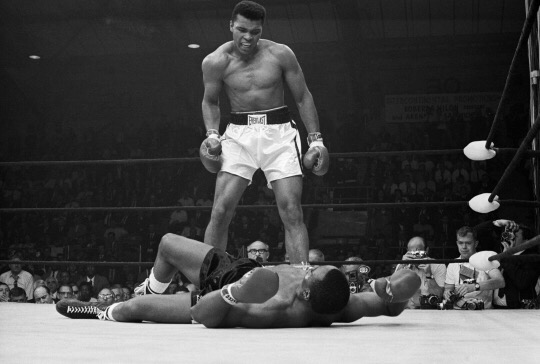
For three consecutive years in college, I bought the above as a poster at an annual fair on campus. The first two met their ends in predictable fashion, either tearing irreparably from the wall one night while I was asleep or falling victim to the typical antics of undergraduate dorm life. The third couldn’t handle the unexpected transition from average resident to resident assistant and ended up in a garbage can, probably next to some Bob Marley counterparts and cans of new formula Four Loko.
The image, of course, is one of the most iconic of the twentieth century, something not even its ubiquity in male collegiate dorm rooms can ruin. In it, Sonny Liston looks up helplessly at the heavyweight champion of the world, a Kentuckian formerly called Cassius Clay whose brash demeanor and furious wordplay underscored a revolutionary style of boxing for the heavyweight division. Muhammad Ali, who has passed away at 74, made a habit of shocking the world, precisely as he said he would.
Though Life Would Still Go On

Michael Ochs Archives/Getty Images
There’s a moment at the very beginning of “Sloop John B,” the closing track of the first side of the album but the first recorded for it, right after the initial glockenspiel tone, that acts as a sort of timeout, as if to give the listener a chance to breathe before launching into another lament. Critics have sometimes met the song, adapted from a Bahamian folk standard, with confusion, wondering where the tale of a doomed ship and its crew fits in alongside the other tracks on the album.
The album, of course, is the Beach Boys’ Pet Sounds, which was released fifty years ago today, originally to mixed reviews which have since gone almost entirely and overwhelmingly positive. Beyond critical reception, Pet Sounds has enjoyed the luxury of indelible influence, assuring its permanent place in the musical version of the United States’ Great books for its lush instrumentation, unthinkably cohesive vocals and relatively simple, ageless lyrics of hope, heartbreak, loyalty and alienation.
Radiant Children

Given the exhibition’s modest title, Van Gogh’s Bedrooms at The Art Institute of Chicago made for a considerable cultural experience before it closed this past week. Curators devised a show winding its way from a giant wall-sized map detailing all 37 of the Dutch artist’s chronicled residences to a serpentine timeline of his life wrapping its way into rooms replete with exotic pieces that influenced him, carefully positioned portraits and drawings, and even a life-sized imitation of the Yellow House’s bedroom itself. The whole thing culminated in the three Arles paintings arranged alongside one another in chronological order. For an exhibit about an alarmingly cramped bedroom, you got your money’s worth.
You had to, really – maybe it’s heartening to see from a cultural studies perspective but, as a sane patron, waiting in line for 90 minutes (or more during peak weekend hours) can turn from enriching to scut work, even if it is art’s most famous sleeping quarters.