Archive

Music

Disclosure: I’ve spent an inordinate amount of time around men directly related to each other recently. To that point, in three out of four recent weekends, I was surrounded by brothers, including my own. I’ve always enjoyed feeding off the fraternal vibe, yet I went to a college without Greek life. The camaraderie, the internal knowledge, the handoffs one can only perform with a certain degree of intimacy: this is what gets me.

From back-to-back bachelor parties through, of all things, a Phish festival, the brotherly tone has been a strong presence for me recently. And then, lo and behold: rumors of an Oasis reunion began haunting my phone on a recent Saturday.

Read More

I didn’t ask for a Les Paul[1] for my birthday one year because of Eric Clapton; I did it because of Jimmy Page, who by 1973 had become all of Rock Music, as far as what most of the U.S. and England – therefore, most of the popular rock music world at the time – had accepted and acknowledged should be. Page maximized what a Les Paul guitar could sound like and expanded that context further than its namesake, an incendiary jazz player in his own right, likely imagined.

I don’t know that my request happens, though, without Clapton’s playing on what is probably the definitive British blues record of that time, in a period when British blues is reviving American blues sensibilities.

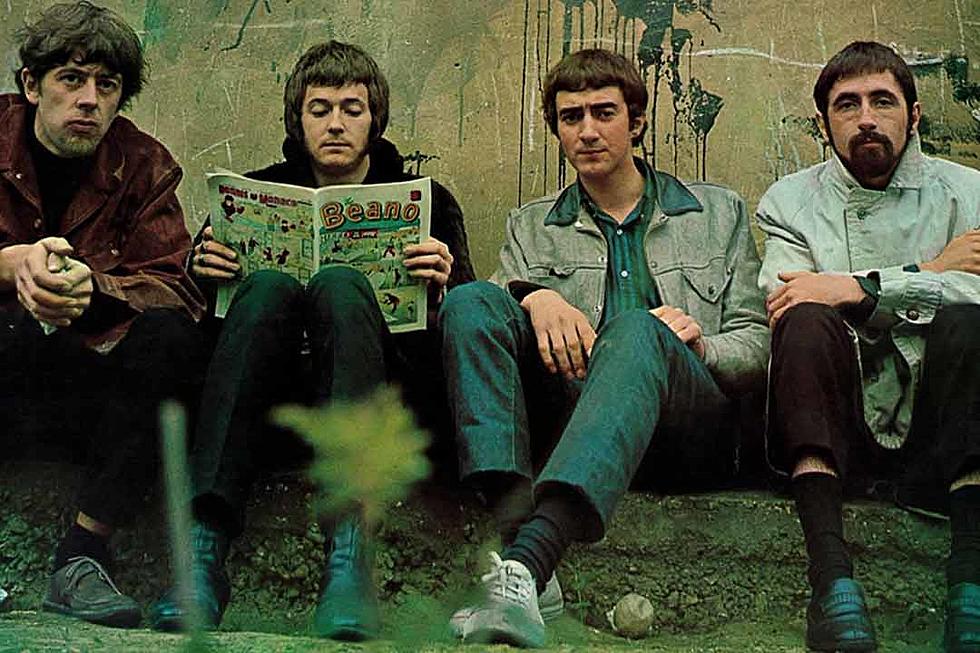
The Beatles, the Stones, the Kinks, among others, witnessed it all and drew from it. “It,” in this case, is John Mayall’s Bluesbreakers. Mayall himself, a Macclesfield native son whose stretch we may not completely realize, died on Tuesday at 90, leaving an influence that extends at least as far as Cream and Fleetwood Mac.

Read More

It tracks that the last song Jimmy Buffett ever played before a live audience was the one on which he built his empire of relaxation: “Margaritaville,” a final salvo over this past July 4th weekend as a surprise guest of Mac McAnally, long a member of Buffett’s Coral Reefer band. Not unlike Prince exiting the stage following “Purple Rain,” or Tom Petty’s last performance ending with “American Girl,” there is something to going out on exactly the tune that laid the path for the rest.

Buffett, who passed away September 1st at the age of 76, defined the idea of getting away, however briefly. When a disgruntled coworker hits the bottle in the early afternoon, justifying it with the requisite “It’s five o’clock somewhere,” that’s a credit to the lifestyle Buffett envisioned for himself and sold at massive scale.

Read More

“You’re still there, huh? We’re gonna do one more song, and that’s it.” His golden, overdriven guitar tone[1] was perfect. He’d already bettered Dylan in some respects; why not trying out Marvin at something way after midnight?

There’s a thing about certain Canadians (two’s a company; three’s a crowd; more: that’s a trend), A few tend to write better songs about the United States than Americans can. Familiarity breeds contempt, or something like it, but from pastoral documentation, à la Neil Young[2] and Joni Mitchell, to the psychodramaticism of The Weeknd and poptimism of Carly Rae Jepsen, some friends from The North hold the mirror up to Americans better than we can do unto ourselves. 

You wanted a hit? Baby, maybe, he just did hits: “The Weight,” “Up On Cripple Creek,” and “The Night They Drove Old Dixie Down” fit the bill. Having backed The Hawk, Ronnie Hawkins, and then Bob Dylan, Jaime Royal Robertson, who died on Wednesday at 80, ran the gamut of roles in early rock bands. Later, he’d end up having to try to save his bandmates, and then himself. He knew how to get the best out of those around him, when the bells were ringing.

Read More

Happy Memorial Day! Great to see you! So, now that you’re here, it’s time to attack: Do you ever think about instigators, or why a lot of people die unnecessarily? Did you see the BARRY finale? What do you fear the most, and why is it the mirror? Anyway, haha, *high five*, let’s honor some of what we thought were the dead, but they’re still living.

Jimmy Butler has fulfilled his mission and obligation as The Man for the Miami Heat. Via the way the game is played today, et cetera, he found himself at the foul line with three seconds to go, the exact three seconds and three shots he needed to close out the Boston Celtics and end any speculation that the best-positioned team in NBA history to recover from down 3-0 would do so. He nailed all three, Michelobs surely on the brain.

Read More

1, 2, 3…

At his core, he was a dancer. If Kobe was the Baryshnikov of his era, Carmelo Anthony was Albert Torres, engaging defenders at the elbow in a perpetual tango evoking their shared Puerto Rican roots. A step forward, a feint with his elbow, a half-pivot, then: gone, with the duck of his sweatband-adorned head. It was one of the seemingly endless ways Anthony could score; it didn’t look effortless, but, like a choreographed routine done right, it usually looked like he was having fun.

Except to older heads whose respect he ended up earning anyway, it doesn’t much matter that the biggest win of Carmelo Anthony’s career happened before he ever made it to the NBA. Everybody wants to win – of course – but winning was never the most interesting nor important thing about Anthony himself. On the day when the team that drafted him bounced the last team he played for from the playoffs, Anthony announced his retirement.

Read More
Burial - Electronic Music of Brainvoyager

Burial’s seminal Untrue was released 14 years and just about a month ago. This is not a round figure, and this is not a timely commemoration of an album’s release date. Instead, I merely wanted to submit my humble meditation on one of my favorite albums of all time and what it means to me personally.

Isn’t it kind of always on-brand to write about Burial’s music whenever the hell the impetus strikes? Fitting, because this seems to be the same approach that Burial takes in releasing his work to the public. I have no other reason for writing about Burial’s Untrue beyond an experience that I recently had listening to the album in its entirety that was nothing but otherworldly.

Read More

On Thursday night, Conan O’Brien hosted what he has said would be his final late-night television episode, on his last late-night television program. He began on TV as a largely unknown 30-year-old in 1993 with exactly the kind of pedigree you would’ve expected then: Harvard-taught, an alumnus of both The Simpsons and Saturday Night Live, an advocate for the weird and disruptive trends emerging in comedy to which, despite him being an Irish-Catholic Massachusetts native, he had a singular pulse.

My introduction to Conan’s work was via Late Night With Conan O’Brien, the show he hosted as the wedge between his beloved Johnny Carson and Jay Leno and which was repurposed as a day-after lead-in to The Daily Show on Comedy Central for a while. When it came time for Conan[1] to assume his seat at the top of NBC’s hierarchy, it suffered from poor ratings and a shift back to late-night along with the Tonight Show name, which Conan would fundamentally not accept. A back-and-forth ensued, and Conan eventually ceded the seat, leaving us bereft of him for a time while he popped up on tour and at music festivals – more on that later.

I understand that his is mainly a slightly-older generation of an audience, the tweeners that both lived to experience Nevermind in real time, cognizant of it or not, and also know how to navigate social media without sparking fights at a dinner table, but my friends and I – white and well-off-ish enough as we were – liked Conan better than any of the others mostly because we never knew what to expect.

Below is a list, mostly off the top of my head, of my personal favorite Conan segments, recurring and otherwise. I know this isn’t the end, but HBOMax’s app is horrendous, and anyway, it isn’t as widely accessible as he has been for thirty years otherwise. Conan, we only wish you well, as you ever wished us.

Read More

Everything slips away, eventually. We have lost so much in 2020 that it’s hard to begin to comprehend it just yet. We might never get there. From the as-yet nearly two million deaths related to COVID-19 to the related job losses to the very idea of truth in a truthiness-saturated world, we are collectively losing many more things, and they are losing us, at a much faster rate than any of us living have ever experienced.

Something leaving us at precisely the same rate as it always has, however, is time. An unhuman entity forced us into our homes and away from our loved ones for long stretches; for once, it seemed, there was a problem that throwing federal government-level amounts of money wouldn’t fix[1]. Most of us were forced to adapt; some didn’t, and died; others did, and died anyway. Time kept on slipping, in all its finite utility.

Under the circumstances, and with nowhere to go, it was up to us to spend a lot of time with ourselves. Election-year news cycles are Ringling Brothers productions gone awry in normal times, but taking in the news, even in the simple pursuit of attempting to stay anything like informed, was an especially depressing exercise in 2020.

Read More

The value of things is not the time they last, but the intensity with which they occur.

If you watched the MotoGP season finale at Portimão in Portugal, you saw two titles decided by razor-thin margins in Moto3 and Moto2. Congratulations to Albert Arenas (who felt like an inevitability despite his tenuous grip on Moto3 all season) and Enea Bastianini (who never felt like an inevitability on his way out of Moto2 until he suddenly became one), two guys who had to fight every lap to manage not just their race positions but also their points gap over their respective pursuers. They were both enthralling races that ended with champions as worthy as any of the alternatives. Good for them.

Then there was the MotoGP main event.

Read More