Archive

Tag Archives: rock

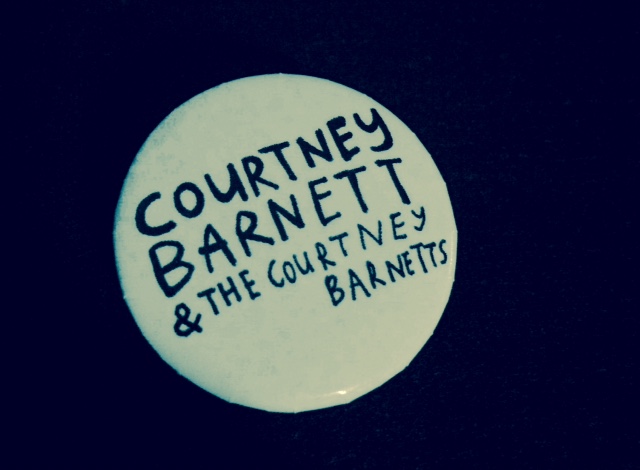
For a few years, since at least the early pandemic but perhaps dating a little earlier, I’ve kept a note in my phone, the start of which you see above. It’s called “Things I will pay top dollar for,” with “top dollar” essentially being the amount I am willing to pay that will not bankrupt me. The list is fairly extensive, and you can’t see the rest of it.

As you may have guessed based on the timing and general tenor of the so far text-heavy image and preceding graf, tonight I get to cross the top item, the very reason for its creation, off of that list.

Read More

Disclosure: I’ve spent an inordinate amount of time around men directly related to each other recently. To that point, in three out of four recent weekends, I was surrounded by brothers, including my own. I’ve always enjoyed feeding off the fraternal vibe, yet I went to a college without Greek life. The camaraderie, the internal knowledge, the handoffs one can only perform with a certain degree of intimacy: this is what gets me.

From back-to-back bachelor parties through, of all things, a Phish festival, the brotherly tone has been a strong presence for me recently. And then, lo and behold: rumors of an Oasis reunion began haunting my phone on a recent Saturday.

Read More

“You’re still there, huh? We’re gonna do one more song, and that’s it.” His golden, overdriven guitar tone[1] was perfect. He’d already bettered Dylan in some respects; why not trying out Marvin at something way after midnight?

There’s a thing about certain Canadians (two’s a company; three’s a crowd; more: that’s a trend), A few tend to write better songs about the United States than Americans can. Familiarity breeds contempt, or something like it, but from pastoral documentation, à la Neil Young[2] and Joni Mitchell, to the psychodramaticism of The Weeknd and poptimism of Carly Rae Jepsen, some friends from The North hold the mirror up to Americans better than we can do unto ourselves. 

You wanted a hit? Baby, maybe, he just did hits: “The Weight,” “Up On Cripple Creek,” and “The Night They Drove Old Dixie Down” fit the bill. Having backed The Hawk, Ronnie Hawkins, and then Bob Dylan, Jaime Royal Robertson, who died on Wednesday at 80, ran the gamut of roles in early rock bands. Later, he’d end up having to try to save his bandmates, and then himself. He knew how to get the best out of those around him, when the bells were ringing.

Read More

(Jorgen Angel/Redferns – courtesy of Pitchfork)

Have you ever noticed that the snare drum never quite hits usually in “Sunshine Of Your Love”? Maybe you have; Ginger Baker never would have assumed that you would expect something like that, given the circumstances. Circumstance is everything, and what you don’t notice can alternately end up killing you, or being the very reason you feel love.

Baker, best known as the drummer of Cream, passed away on Sunday at the age of 80. Anger and belligerence are as key to his story as they are to those of his dairy bandmates’, and Baker was perhaps the most prominent person that enabled the expansion of what we thought a rock trio[1] could be. Getting Jack Bruce to run through a fuzz box helped, sure; throwing Ginger Baker as many drums and cymbals as he could handle, though, was the key revelation to tying the British blues rock push together.

Read More

(Public domain, hopefully? Let us know if this is a problem)

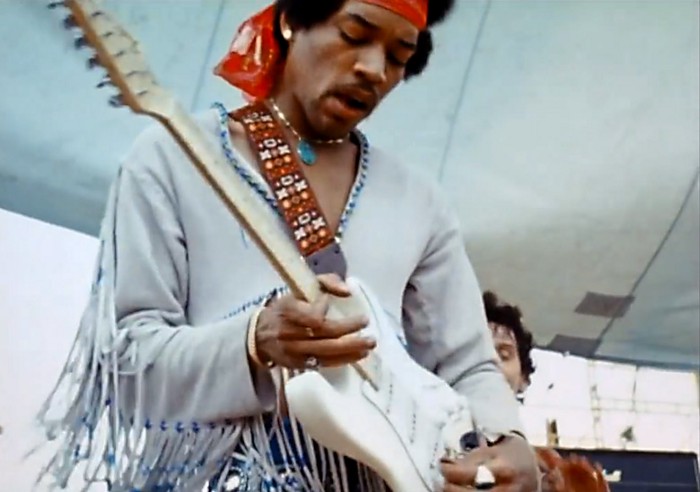
After the fact, he would simply refer to the performance as “beautiful” in an attempt to deflect accusations of controversy in the face of a divided nation. A few months after that, around the change of the calendar, he would roll out his true protest, the finest electric guitar symphony ever conceived, in what would end up being the only showcase for his talents that were actually on his terms. He would be dead within the year, nobody the wiser.

But in this moment, at 9 am the morning after the damn thing was supposed to end on the saturated grounds that were never as good as they looked on film long after the fact to the millions upon millions who were nostalgic for something that never was, he was free. He hoped only for as much as that for everyone else. Fifty years ago today, at right around the time this post is publishing, Jimi Hendrix played the longest set of his career at Woodstock, a sloppy, convoluted mess which nevertheless gave us an interpretation of “The Star-Spangled Banner” that has confounded and inspired ever since.

Read More

A funny thing about growing up with parents ceaselessly devoted to the music they like:  after a certain point, the idea of a “soundtrack” to growing up dissipates, and you’re left with a pastiche of sounds that, without warning, can trigger any number of nostalgic thoughts years, even decades, later. You didn’t ask for this, but it’s what you got. You live with it, and eventually, hopefully, you become grateful for it.

Along with a handful of other artists, I don’t remember the first time I ever heard Tom Petty because he was always just there. Not to make an assumption on your behalf, dear reader, but I’ve got a feeling that, unlike most of the rest of them for me[1], you likely don’t remember the first time you heard Petty either. He’s always been there, for all of us, which made it all the more devastating when word officially came down late Monday night that Petty had passed away at the age of 66.

Read More

Getty Images

What is it that riles up the Gallagher brothers? The list of answers to that question are as extensive as the number of fans that fill the grounds at Knebworth in 1996, the framing device for the Oasis documentary Supersonic, which enjoyed a one-night U.S. debut Wednesday evening in cities across the country[1].

As several reviews noted ahead of time, Supersonic largely avoids anything from Knebworth onward, instead focusing its efforts on the Gallaghers’ childhood in a Manchester suburb, their shared musical ambitions and the eventual rise of Oasis while merely hinting at what falls outside of the film’s timeline. Despite this somewhat revisionist view – who among us in 2016 isn’t out to use filters to enhance away imperfections, real or perceived – the film is a compelling look at the most important, and self-important, British band of the mid-1990s.

Read More

AP Photo/Kevork Djansezian

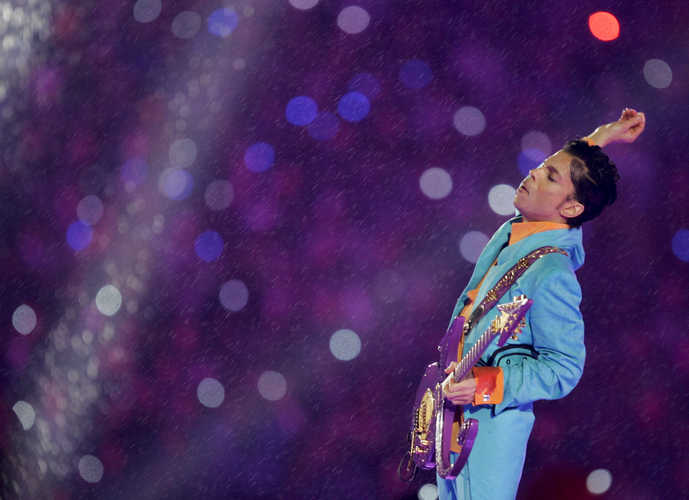
Unlike His Royal Badness himself, it came suddenly. A text message, then two, a tweet here, a trending Facebook post there, and then it was clear: As TMZ first reported, Prince Rogers Nelson, the ageless king, and queen, of your favorite musical style, had passed away suddenly at the age of 57. As the man himself once sang, everybody wants salvation, but we here at Tuesdays With Horry can’t (knowingly) give you that, so we’ve pieced together a few memories and thoughts on this diminutive genius who was larger than us all. Dig, if you will, our picture.

Read More

Imagine being the world’s biggest pop star at 24, an icon of one musical genre and the reluctant voice of a stifled, conflicted generation. At just the time your organic rise became meteoric, you re-discovered an old passion for electrified rock and roll, the kind you used to play rambunctiously before leaving it behind in Minnesota.

To people of a certain age or inclination, July 25, 1965, is a date of considerable magnitude. On that date, in Newport, Rhode Island, the most influential songwriter of the twentieth century made perhaps the most important decision of his life, one which has left an indelible effect on pop music and American life.

Read More