Archive

Tag Archives: COVID-19

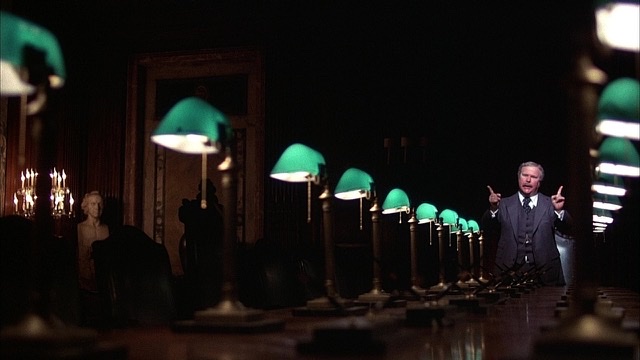
Ned Beatty as Arthur Jensen in Network (1976)

Wall Street in the American imagination is simultaneously held in a state of contempt and awe. It’s the site of both magic and misery.

The name “Wall Street” itself has become a shorthand to denote the capitalist class. Yet, Wall Street is only a segment of this class, known as Finance Capital. 

Finance Capital has become a growing segment within capitalism since the 1970s due to the decline in American manufacturing. Manufacturing took a dive during the 1970s in America due to the postwar recovery of European industries and the emergence of Asian competitors. Big swings in oil prices during the OPEC crisis of 1973, as well as inflationary spending from the Vietnam War, also broke the halcyon days of American prosperity, to which many politicians and their constituents today look to return rather than an anachronism. 

Read More

Everything slips away, eventually. We have lost so much in 2020 that it’s hard to begin to comprehend it just yet. We might never get there. From the as-yet nearly two million deaths related to COVID-19 to the related job losses to the very idea of truth in a truthiness-saturated world, we are collectively losing many more things, and they are losing us, at a much faster rate than any of us living have ever experienced.

Something leaving us at precisely the same rate as it always has, however, is time. An unhuman entity forced us into our homes and away from our loved ones for long stretches; for once, it seemed, there was a problem that throwing federal government-level amounts of money wouldn’t fix[1]. Most of us were forced to adapt; some didn’t, and died; others did, and died anyway. Time kept on slipping, in all its finite utility.

Under the circumstances, and with nowhere to go, it was up to us to spend a lot of time with ourselves. Election-year news cycles are Ringling Brothers productions gone awry in normal times, but taking in the news, even in the simple pursuit of attempting to stay anything like informed, was an especially depressing exercise in 2020.

Read More

The Basílica de la Sagrada Família

The first architect of the Sagrada Família was a man of diocesan ilk and inspiration, exactly the kind of person you would hope and expect to build something prototypically beautiful and adhesive to the traditions and standards that the Catholic Church, particularly in Spain, would presumably place upon a person. He took the same approach to his projects, calculating and reasonably efficient, that you take to ordering monthly subscription boxes, or homing in on preferred brands of toothpaste. “This works, it addresses a problem, so I like it, and let’s stick with it for now, until and unless a problem arises.”

Francisco de Paula del Villar y Lozano was no slouch, having aided in the designs, re-designs and restorations of many important buildings in and around his native Catalunya[1]. He took on the project under the advisement of the Associació de Devots de Sant Josep, and when it got to be too much, his adviser Joan Martorell recommended Antoni Gaudí, an exceptionally devout Roman Catholic even by Catholic standards. The latter then spent the final years of his life figuring out what to do with the thing before, well, getting hit by a tram and passing away in 1926.

Read More