Russell Westbrook Rests

Lost and found in his singularity, Russell Westbrook believed in himself more than anybody he ever faced in his eighteen-year career, now and stunningly in its past tense, has ever believed in themselves. Not once, from his highly-touted Leuzinger High years in Long Beach onward, did a camera pan on him in a moment of doubt.
Through his final NBA basket, a layup with the Sacramento Kings, Russ believed that he could win every game by some combination of his own hands, feet, an angular explanation of basketball that may only exist in his magnificent brain and a standing-upon-business that few players in the history of the game ever exhibited.
Los Angeles was strong in him, the Kobe influence apparent. Drafted a Seattle SuperSonic but minted as a league MVP with the Oklahoma City Thunder, nobody went harder, to his fans’ delight and detriment, than Russell Westbrook, who on August 12th of this year announced his retirement from basketball.
There will never be another. He was stardust; he was golden, and he retires, for the time being, as the NBA’s all-time leader in triple-doubles. On any given night from somewhere around 2011-2020, Russ was the best basketball player who has ever lived. For one brilliant year in particular, Russell Westbrook was all of basketball. Surrounding the edges of that towering inferno lay a wasteland of ankles, ideas and best-laid plans. When some of them went the way those tend to go, Russ took off like a haybale headed for the promised land.
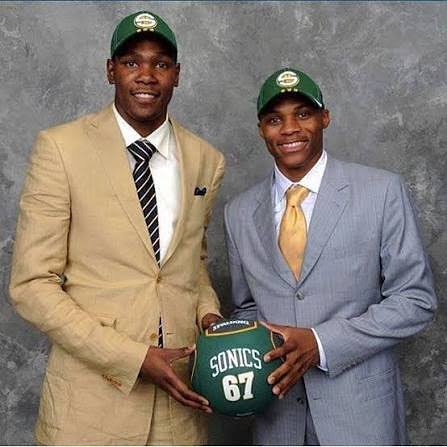
Arriving out of UCLA, Westbrook was a new kind of prototype, with perhaps the most explosive first step ever and an eye for improbable passing lanes. Having learned under the expert tutelage of Darren Collison, long since born again, gone again and otherwise[1] and fresh from a Final Four appearance alongside eventual co-Olympic Gold Medalist Kevin Love, Russ left after his sophomore season. With Sam Presti at the helm, the team that was shortly to become the Oklahoma City Thunder drafted Westbrook with the fourth overall pick in 2008.
Any of what he did in Game 4 of the ill-fated 2012 NBA Finals against the absolute best of LeBron James and the Heatles was the blueprint; his 43 points on 12-20 shooting stood as one of the best jump-shooting games of Russ’s career, and always what it could look like, if you squinted hard enough.
Foreshadowing the rest of it, he didn’t hit a single three, and it happened in a loss. The ceiling existed, just as it had when Russ was tabbed as a tenacious defensive prospect during his all-conference turn as a sophomore in Westwood. Along with off-ball movement and a tendency to cheat on defensive passing lanes, developing a reliable and, increasingly, long jumper became the perpetual offseason ask of Westbrook development.
The highlights become cemented: the steal against the Los Angeles Lakers in the 2012 playoffs, the many transition dunks and assists to Kevin Durant, the stop-motion pull-up jumpers and the skip-passes provided an eye on Russell Westbrook’s interests. The latter, non-exhaustively, includes: win the game; ball-watch to a tantalizingly good but often distracted extent on defense; brutalize triple-teams that collapse upon entry into the paint, abandoning all of the surrounding shooters and allowing for a skip-pass to one of them, wide open; win the game; get the guys theirs.
Patrick Beverley cutting Russ down, tearing his meniscus in the 2013 playoffs, undid that edition of the Thunder as well as Westbrook’s own streak of games played, dating back to high school. The following year they lost to the eventual champion San Antonio Spurs; when Klay Thompson came especially alive in Game 6 the year after that, and then the rest of the Thunder fell apart in Game 7, the blood ran thin, and KD headed west. Whether it was at Draymond Green’s or his own behest remains to be seen.
It left Russ to lead a doomed squad that looked similar to the 2015 OKC team, but nobody could tell him that. The highlights started amassing in droves: the Shammgod assist to Steven Adams, a perfect basketball play; the buzzer-beaters, plural, culminating in the shot from a ZIP code over against the Denver Nuggets in April 2017, which was the same night he broke Robertson’s record for triple-doubles in a season. On the floor that night, appropriately, was his future teammate, Nikola Jokic.
A journey directly in opposition to how basketball was shifting at the time, Westbrook led the Thunder into the spread offense, three-heavy world that he believed he could almost individually overcome. On behalf of the rest of us watching, his teammates bought all the way in, a rookie Domas Sabonis, pre-All Star Victor Oladipo and a gangly group catering their playstyles to the talisman.
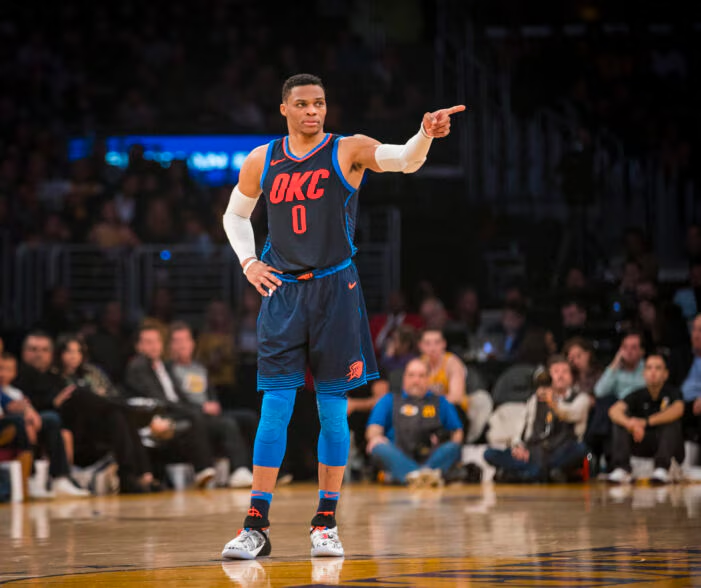
Every other night for seven months straight, Russell Westbrook became a continent. He was a self-imposed trade agreement, a self-imposed exile. An eventual Count of Presti Cristo, Russ dictated how a single team’s fortunes would break in any given game more than anyone heretofore or since.
Against this site’s own prediction regarding his usage rate that year, Westbrook obliterated that record on his way to the scoring title. Four days after Crenshaw’s finest, Nipsey Hussle, was killed, Russ went for 20-20-20, adding his name to a list that had only previously included Wilt Chamberlain. The marathon continued.
Questions persisted regarding his particular brand of centricity. Though he led the league in assists thrice and carries an eight-per-game average, that his standard mode was to push ahead and either shoot or dish at the last possible second to sometimes unsuspecting teammates meant that a few more possessions went unpredictably-per-capita, thus generating more opportunities for scoring, rebounding or assisting. He matched Oscar Robertson’s averages, and then did it a few more times, to varying degrees of team success. Bumping around with PG and Melo only got them the best of the Rudy-Don Jazz and Dame’s Blazers.
By the time he was traded for Chris Paul, his old running mate and again teammate James Harden had won an MVP. Under Stephen Silas, that team tried running Westbrook as a center in certain schemes, which looked a promising alternate reality, one in which Steph Curry has never existed and wouldn’t go on to win a fourth title two years later. That Rockets team lost to the eventual champion Lakers in the bubble.
Getting the 2021 Washington Wizards to the playoffs while almost nonchalantly, as far as the Brodie’s standards go, averaging a triple-double showcased the teammate-centric ethos that Russ moved to imbue onto the younger generations, an ambassador of the game, nevermind all of the coy hullabaloo with the press.
From the Wizards, Westbrook bounced rather acrimoniously from the hometown Lakers and Clippers – at James’ initial behest in the former and as a reportedly willing bench piece in the latter – to a last-chance dance with the Denver Nuggets in 2024-’25. Throughout, Russ held true: always on time, always accountable, always prepared.
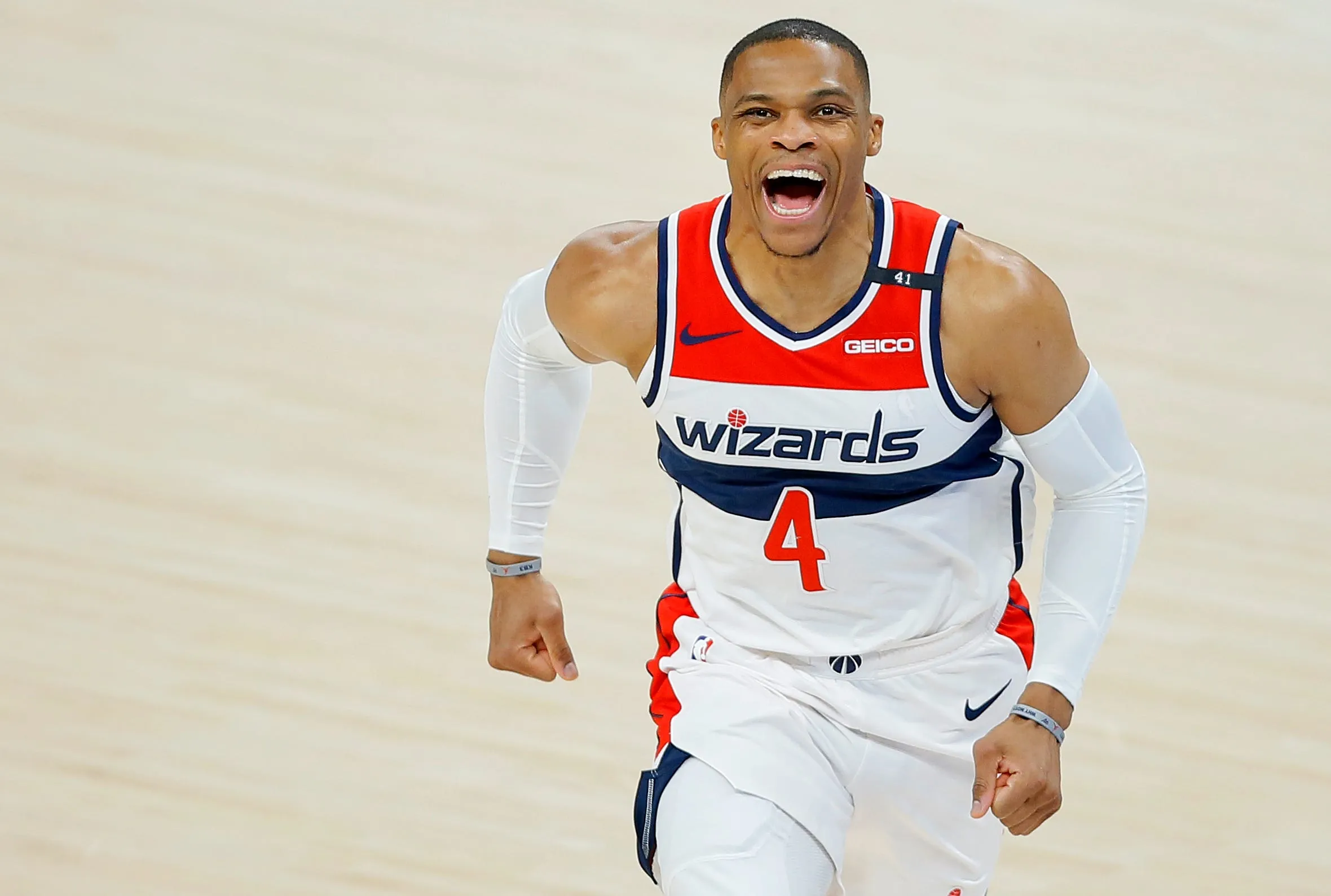
The Nuggets were closely enough removed from a title to be convincing as contenders. Jokic remains among the best three players alive, and his chemistry with Westbrook was stunning. Sometimes in reverse but often in the flow of wherever they were, the Joker and the Brodie combined in a dance that would yield the attention of just greater than two and a half total defenders, enough to open a passing lane to Aaron Gordon or a backdoor screen allowing Christian Braun to slink to a dunk.
That team was Russ’s last good chance at a title. Sometimes he evoked his Bruins teammate Love’s outlet passing by flicking the ball on one-touch to a waiting Jokic in the paint. It could be the clearest-eyed passing inside the paint between two teammates since something like the 2014 Spurs, or at least the 2021 Bucks. Having honed his distribution and assessment of the floor in total in the post-KD years, Westbrook had a visionary match in Jokic, someone who views the floor similarly uniquely.
Ah, but at other times, it was Russ engaging in De’Aaron Fox-type behavior and ruining Jokic’s 60-point triple-double on national television by driving for a layup when it wasn’t his turn to drive for a layup. Through it all, sing it from the hills: the Brodie remained the Brodie. Falling to the eventual champion Oklahoma City Thunder was its own form of justice.
In signing the week before the season began last year with the Sacramento Kings, Westbrook embraced the mentor role in totality, as he had everything else. His final pull-ups were next to fellow gods of the midrange and descendants of Mike and Kobe, each with LA ties, DeMar DeRozan and Zach LaVine. He was rocking babies at the rim and at home while running a misguided one last job.
When the time came that reports suggested he might be considering European teams, or that European teams might be interested in him, depending on whose agent said what to whom, the ball had stopped bouncing. His retirement comes as a surprise, and it doesn’t. No other 37-year-old point guard quite had the eighteen-season NBA career that Russell Westbrook had; everybody agrees.
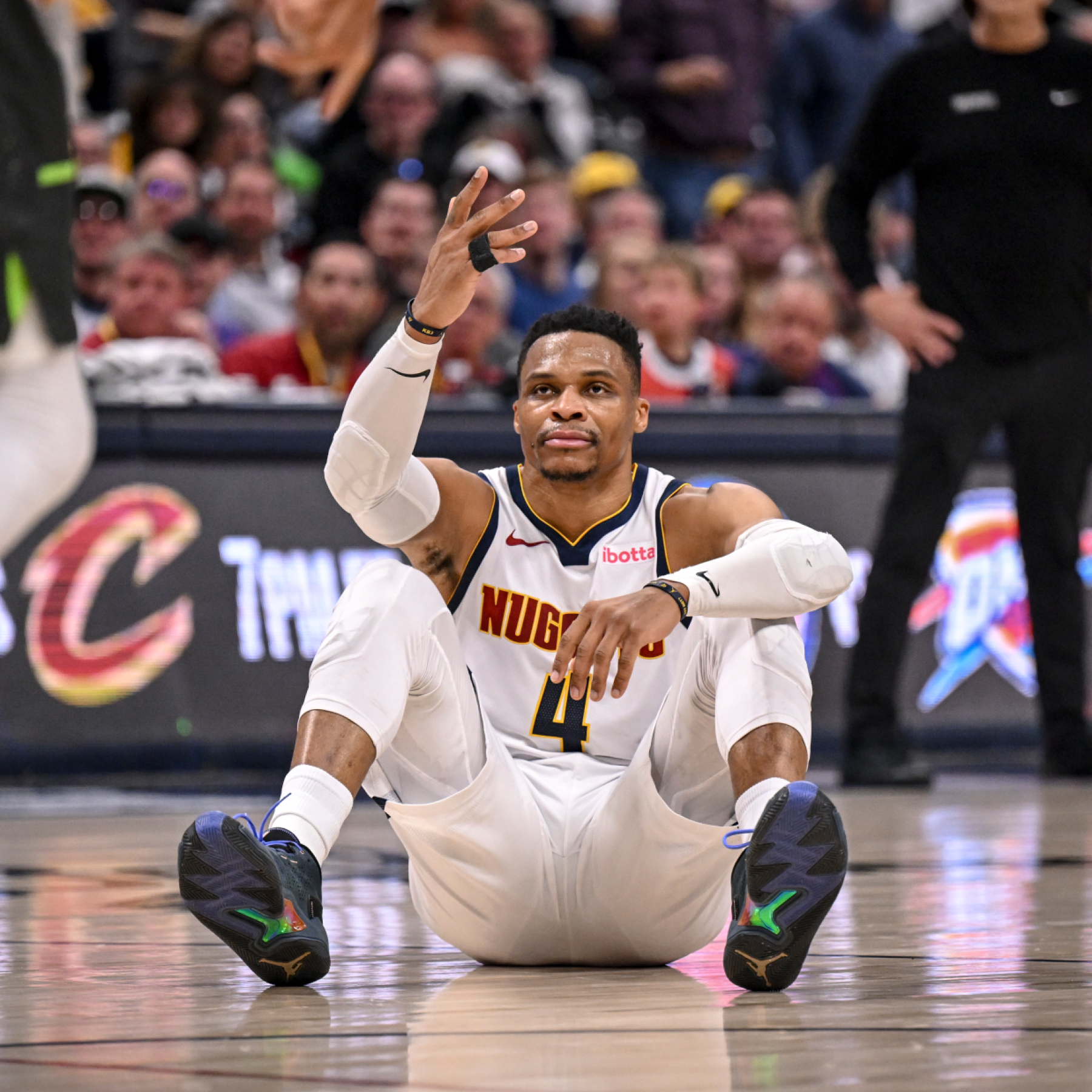
During Westbrook’s final all-NBA season with the Houston Rockets in 2020, Zach Lowe described his on-court presence as “just…a feel” that no opposing team could properly address. Though his at-rim finishing began diminishing thereafter, there was no substitute for inserting Russ and going full #LETWESTBROOKBEWESTBROOK. Even into his autumn years, the unpredictability of his game, his channeling Ornette Coleman in the middle of a fastbreak, was of some value.
Russell Westbrook retires something like a much less verbose Charles Barkley, an incomparable and singular player having arrived alongside generational talents who never quite got it together at the right time with the right people in order to win a title. Attempts to compare him to anyone else fall short because of when he arrived and how he survived this long playing that way.
No matter. If anything realistic, his influence lay in the energy he exerted in every game. Watching Russell Westbrook play basketball was a visceral experience that, at its peak, had no parallel, and likely never will again.
[1] Upon completing his crusade, Collison returned to play three games in the 2021-’22 season alongside Westbrook with the Lakers.

