BluesBreaking NewsBreaking (John Mayall, 1933-2024)
I didn’t ask for a Les Paul[1] for my birthday one year because of Eric Clapton; I did it because of Jimmy Page, who by 1973 had become all of Rock Music, as far as what most of the U.S. and England – therefore, most of the popular rock music world at the time – had accepted and acknowledged should be. Page maximized what a Les Paul guitar could sound like and expanded that context further than its namesake, an incendiary jazz player in his own right, likely imagined.
I don’t know that my request happens, though, without Clapton’s playing on what is probably the definitive British blues record of that time, in a period when British blues is reviving American blues sensibilities.
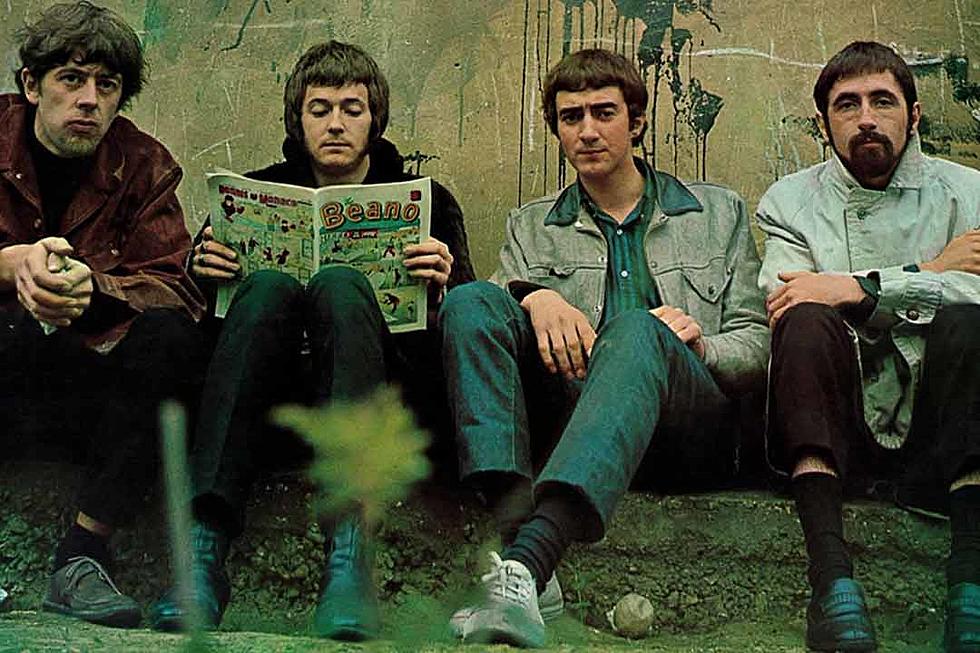
The Beatles, the Stones, the Kinks, among others, witnessed it all and drew from it. “It,” in this case, is John Mayall’s Bluesbreakers. Mayall himself, a Macclesfield native son whose stretch we may not completely realize, died on Tuesday at 90, leaving an influence that extends at least as far as Cream and Fleetwood Mac.
But, of course, I first feel compelled to talk about myself: Blues Breakers With Eric Clapton is the first album I ever learned all the way through on guitar. I continue to recommend it to anyone willing to engage with what I’ve now come to think is a rather basic approach [2] to dialing up guitar work, but: the pentatonic scale is abundant on that album. There’s a part of me that thinks no person picking up a guitar for the first time while listening to it doesn’t know how the fundamentals work by the end of it.
That album set sails on every Marshall amp sold since (including Hendrix’s). Clapton’s work from the first slide up the neck on the cover of Otis Rush’s “All Your Love” is quintessential feedback-eliciting guitar work. All the way through, it’s the sound of a guitar on rails, sparking when it tips.
It remains one of my favorite playthroughs, something I return to especially when I’m frustrated with something else I’m either trying to learn or trying to top.
John Mayall was conscripted to Korea, where he bought a guitar. He ended up in London, where he landed in a band with musician/radio host/blues apologist/bon vivant Alexis Korner, before launching his own group: the Bluesbreakers began with him, Peter Ward, Bernie Watson and John McVie – future husband of Christine McVie, who made loving fun.
Some vital bullet points:
· Blues Breakers With Eric Clapton involved the following people: Mayall, of course, the conductor.
· Eric Clapton: immediately following his acrimonious split from the Yardbirds, the dude’s name is in the title of a record that a band he’s ostensibly in (but has also kind of slid his way out of already) is putting out. His parts are the parts I learned. It helps and it doesn’t, in so many ways, but whew, that tone is impeccable. He knew how to dial it in.
· John McVie: Laying down some of the better standard blues transitions in English rock. He gets it. ALSO: He was about to get involved with Christine McVie, both the best and worst decision of either of their lives. They make it work after that, mostly.
· Hughie Flint has some Harper Lee-type stuff on that record. He basically didn’t do anything after this. Couldn’t some bar band that became Lynyrd Skynyrd have used someone like you?
· Eric Clapton, Pt. II.: Hendrix looked at Dylan and said that if that voice is good enough, so is mine; “Ramblin’ On My Mind” on this record is my version of this [3]. Young Clapton’s voice work is incredible. It didn’t hurt that this was the easiest guitar solo to learn on the album, but also: listen to that solo, with only a piano and bass to confront it. Put that on my tombstone; it’s something I can understand.
· Jack Bruce was in and out of these sessions before committing and then de-committing to Manfred Mann.
· Right after this, Clapton left the band. Mayall first recruited Mick Taylor, who’d filled in when Clapton went AWOL in ’66.
· Clapton’s guitar amplifier throughout this, an even dirtier combo version of their stacks from 1962 called the Bluesbreaker, becomes legendary.
· Mayall then recruited Peter Green, with whom they’d make what would’ve been the seminal British blues record if not for Blues Breakers, A Hard Road, which seemed to bring Green so much celebration as a deity fill-in that he left the band to form Fleetwood Mac.
· Taylor came back, right before joining the Rolling Stones in Brian Jones’s absence.
Alright, enough. Mayall’s apprenticeship program of killer artists out of the British Isles worked wonders on a following generation. He explored blues-influenced jazz with ex-Bob Dylan producer Tom Wilson and Allen Toussaint. In April, he was selected for induction to the Rock and Roll Hall of Fame – in the influence category, perfectly.
He’d reunite with old band members over the years, when it was clear that people needed to pay John Mayall alms. It’s not even his own guitar playing that gets me about his passing, though he was an exceptionally capable blues player in his own right.
No, no: it’s Mayall’s recognition of the best people around him, guitar or otherwise, that gets me. He saw genius and needed to spend time with it: who wouldn’t want to do that if you have something approaching similar expertise? John Mayall took the stick from the jazz heads and furthered it scene past mod sensibilities. All his love? It was always there, and if you found him, he had it for you.
[1] Epiphone, to be clear.
[2] In this case, rudimentary as opposed to cringeworthy.
[3] For the blues heads: also my favorite Robert Johnson song.
 Tuesdays With Horry